wabi — Self-regulation for neurodivergent minds
I wanted to solve a productivity problem. What I found was an emotional problem.
wabi is an iOS task app for neurodivergent people. Born from the realization that existing productivity apps don't fail due to missing features – but due to emotional reactions. Every one of my interview partners (N=4) had abandoned to-do apps after 2-3 days.
Problem
Classic to‑do apps optimize efficiency but add pressure: too many options, rigid deadlines, and red warnings amplify overwhelm. The result isn’t better work – it’s guilt, avoidance, and ultimately abandonment.
Target group
Neurodivergent people (e.g. ADHD) who need self‑regulation, not more speed. They benefit from clear prioritization, small achievable steps, and an app that respects emotional state instead of punishing it.
Screens
High-fidelity mockups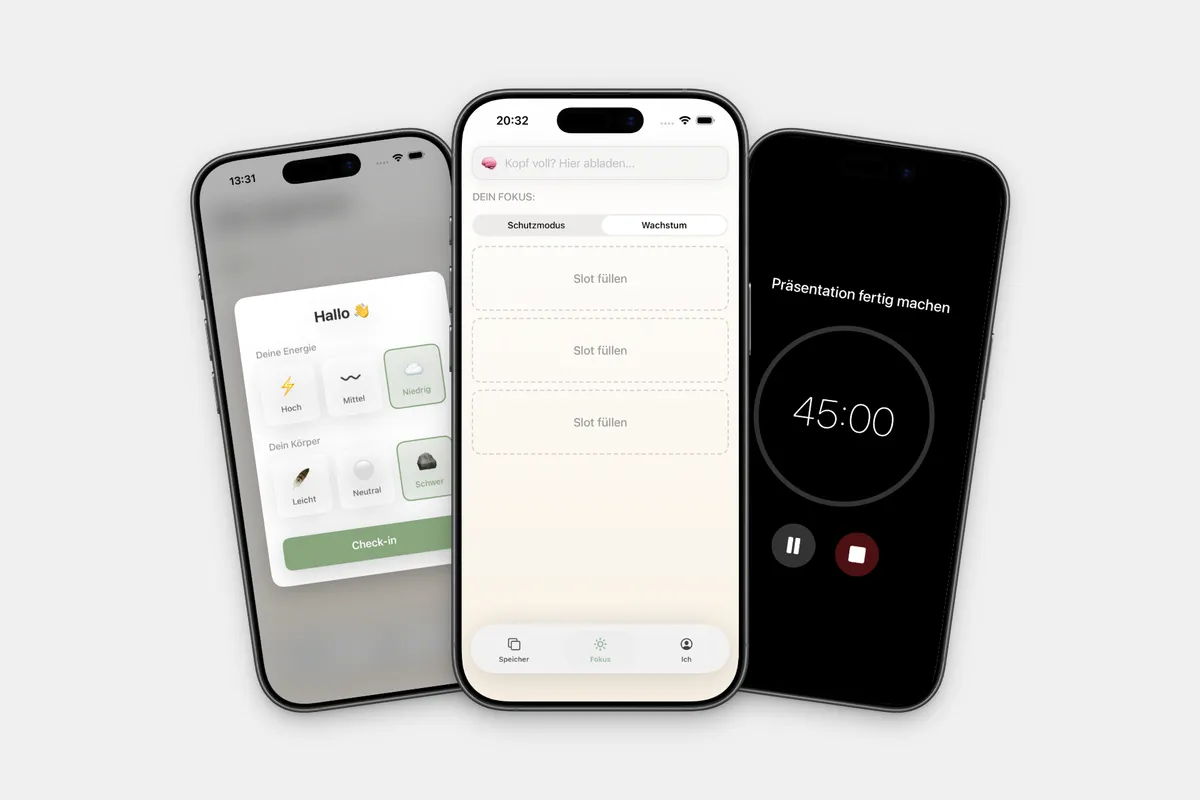
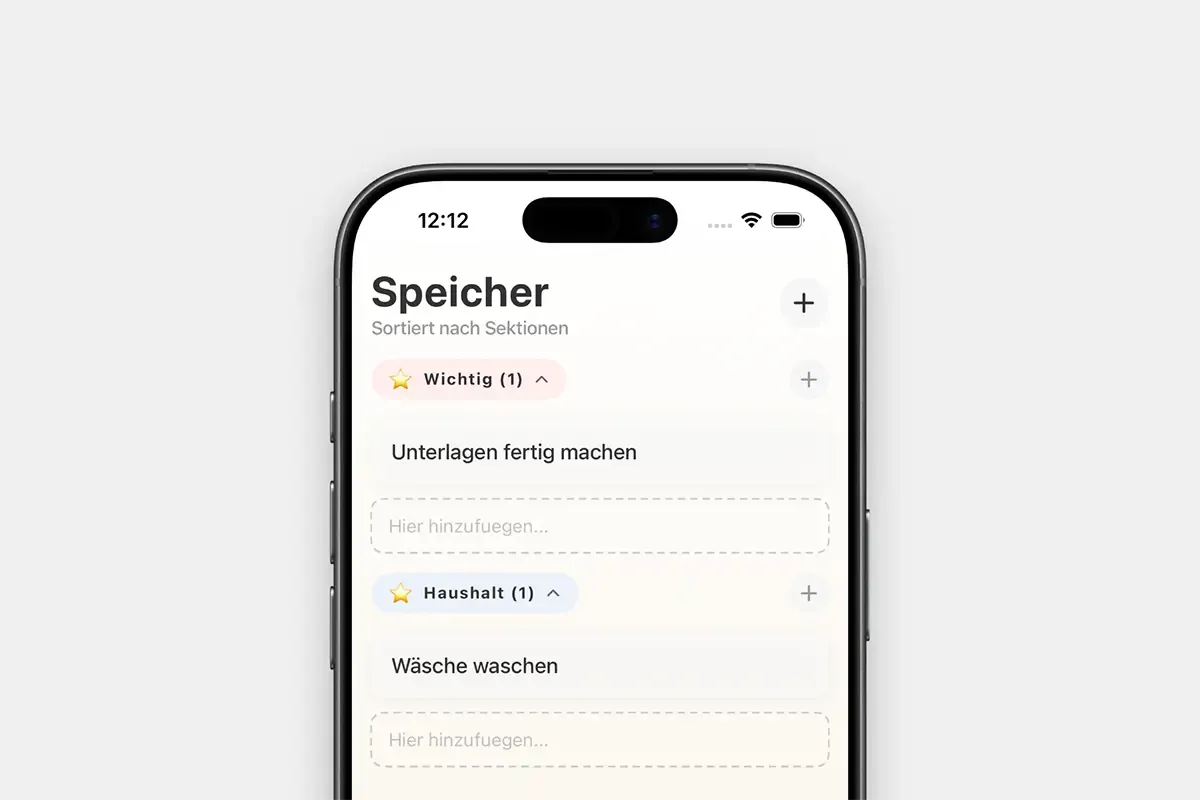
The Problem
Every one of my interview partners (N=4) abandoned to-do apps after 2-3 days
100% reported decision fatigue and overwhelm
75% experienced guilt & shame from red "OVERDUE" markers
"When I have too many options, sometimes I just don't do anything."
"The main killer is when you leave with the feeling you didn't accomplish what you wanted."
"I deleted the app because it was basically looking at me accusingly."
The Pattern
A cycle of Hope → Overwhelm → Shame → Abandonment
The real problem isn’t that people with ADHD “forget” to use their apps — they leave them on purpose because those apps ignore emotional reality. Rigid structures, option overload, and shame‑inducing UI patterns turn well‑meant productivity tools into emotional burdens. The solution can’t be “more features” — it has to rethink the foundation.
This isn't a productivity problem. This is an emotional problem.
wabi - Self-regulation for neurodivergent minds
Why neurodivergent people?
ADHD diagnoses in adults: +43% since 2010
2.14 million ADHD adults (DACH region, 25-45 years)
Existing apps ignore neurodivergent needs
Why wabi?
Window of Opportunity
Growing market without real solution
Empathy meets Execution
Because I'm diagnosed myself
My Approach
Emotion before Efficiency
"How are you?" comes before "What's next?"
Autonomy before Instructions
Suggestions, not commands. Without pressure.
Participation before Expectation
No guilt. No streaks. No red.
The market is growing, real solutions are missing, and I’m part of the target group — that’s the foundation for wabi. My approach follows three principles directly derived from the interviews: emotional self‑awareness beats task optimization. Suggestions beat commands. And participation without pressure beats streak mechanics.
The Solution: Three Core Features
Emotion-First Check-In
"How are you?" comes before "What's next?". The emotional state determines which features are active and how the app communicates.
Adaptive Focus Slots
Never more than 3 active tasks. The app adapts: In Protection Mode only 1 slot, in Growth Mode up to 3. Against decision fatigue.
Time Boxing
Users define their work budget. The app protects against overwork and hyperfocus – not from too little, but from too much.
What sets these three features apart from conventional productivity apps: they don’t demand, they offer. The check‑in asks instead of assuming. The focus slots adapt instead of overwhelm. Time boxing protects instead of limits. This stance — autonomy over instruction — is the core of wabi and comes directly from user interviews.
The Prototype
Built a real iOS prototype with ClaudeCode.
4325 lines of code
35 Swift files
Can be tested directly on devices
Can be co-developed with an experienced developer
When new technologies become available, I want to try them in practice immediately. With Claude Code, I took wabi from the first line of code to a testable iOS prototype - the 0-to-1 phase where fast iteration is critical. This makes it possible to validate and further develop the emotion-centered concept directly.
Roadmap & Next Steps
MVP Refinement
- • Refine emotion-tracking flow
- • Optimize onboarding for ADHD users
- • Test performance & stability
Beta Test
- • Define premium tier & A/B test it
- • Launch beta program with the ADHD community
- • Weekly feedback loops & iteration
Market Validation
- • Win and support 30 active beta users
- • Test willingness to pay for the premium version
- • Analyze usage behavior (frequency, drop-offs)
Launch Preparation
- • Define launch timing and channels
- • Turn beta users into brand ambassadors
- • Set feature priorities for the next 6 months
The roadmap follows lean principles and is intentionally designed for the reality of a solo product manager without an in-house dev team. Instead of jumping straight to launch, Build-Measure-Learn is central in every phase: first achieve small, measurable wins like working features, real user feedback, and first paying users before making larger investments. Each phase has clear exit criteria so assumptions are validated systematically and wasted work is minimized.
Risks & Challenges
Organic growth takes time
Retention validation: 35% Day-7 retention is ambitious, must be proven in beta
Willingness to pay must be validated
Realistic Assessment
- → MVP phase crucial for product-market-fit
- → Community building beyond product performance critical
- → Long-term commitment needed, not a quick-win project
Every product has risks. For wabi, they are mainly time and resources: organic growth is slow, community building requires endurance, and willingness to pay must be validated. The realistic assessment also shows that this is exactly what the MVP phase is for: proving product-market fit before larger commitments are made.
Learnings
Product discovery is not linear.
User research before everything else.
What I want ≠ What users want
wabi was an intense lesson in product discovery. I learned that the process is rarely linear, and user research does not only belong at the beginning, it has to accompany the entire process. The hardest part was letting go of my own feature ideas when they did not match real user needs. That distance between personal vision and validated demand was the most valuable insight.
More Projects
Discuss the project?
I'm happy about feedback, exchanges, and inquiries.